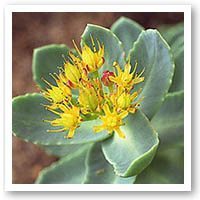
Rhodiola rosea.
 RHODIOLA – an amazing herb for increased energy, stamina and mental performance.
Rhodiola rosea also known as rose root, golden root, arctic root and Russian rhodiola, is native to cold northern alpine regions, and is a hardy plant which thrives on rocky slopes. It has been used for centuries in Northern Europe and Scandinavia.
Rhodiola possesses tonic and stimulant properties that increase resistance to stress and disease. It is traditionally believed to give strength and stamina and is known to increase attention span as well as work productivity, providing a dramatic boost in energy levels, increased memory and mental performance. It has been commonly used to treat long-term illness and tiredness due to infection, mood elevation, mental alertness, sports performance, impotence, liver problems and as adjuvant treatment of cancer.
Recent studies have shown that Rhodiola may also be useful in the treatment of binge eating, nicotine withdrawal, erectile dysfunction and infertility.
At Health In The Bay, our Naturopaths use a herbal extract of Rhodiola in liquid herbal medicines which are custom blended for patients. One of the great benefits of mixing a number of herbal remedies into a formula is that it can be made to suit individual requirements. The many beneficial actions of Rhodiola can be enhanced by combining with other suitable herbal medicines. For example:
- Rhodiola combines well with other herbs that increase resistance to stress and disease such as Siberian ginseng and Withania.
- Rhodiola combines well with other herbs for Depression and nervous debility such as St John’s Wort and Skullcap
- Rhodiola combines well with other herbs for male sexual dysfunction such as Tribulus and Saw Palmetto
- Rhodiola combines well with other herbs for menstrual disorders such as female reproductive tonics Paeonia and Dong Quai
- Rhodiola combines well with other herbs to make brain tonic and study mixes such as Bacopa and Ginkgo
- Rhodiola combines well with other herbs for liver problems that protect and restore liver function such as Schisandra and St Mary’s Thistle.
A word of caution: Rhodiola use is not advised for depressed patients with hysteric and phobic symptoms as may occur with bipolar disorder. Concurrent use of stimulants such as caffeine is best avoided. It is important to consult with a qualified Naturopath or herbalist before taking Rhodiola.