Acupuncture is very useful in pregnancy, from alleviating exhaustion and morning sickness in the early weeks to bringing relief from back pain, haemorrhoids and indigestion later in pregnancy. It can even help a breech baby turn head down!
As you approach your due date (from about 35 weeks), we recommend a weekly program of “pre-birth” acupuncture to prepare for labour. Women who have this sort of acupuncture program are less likely to need interventions during labour than those who don’t.
Here are some of the pregnancy-related issues our Acupuncturists use Acupuncture to help with:
Morning sickness
Tiredness/exhaustion
Anxiety
Insomnia
Swollen ankles and fingers
Carpal tunnel syndrome
Indigestion, acid reflux
Pelvic pain
Sciatica and low back pain
Breech baby and other malpositions
High blood pressure
Induction of labour (in some circumstances)
Plus the benefits of Acupuncture extend to helping with recovery from labour, promoting the flow of breast milk and treating mastitis.
Chinese herbal medicine is also helpful during pregnancy, with several thousands of years of safe use in pregnant women
Our Acupuncturists are experienced in working with women at all stages of pregnancy and in the post-birth period. Health-fund rebates are available for Acupuncture treatments.
https://healthinthebay.com.au/wp-content/uploads/2013/09/acupuncture_and_pregnancy.jpg200200Andrewhttps://healthinthebay.com.au/wp-content/uploads/2022/11/HITB-Horizontal-Header-Logo-Colour-02.pngAndrew2013-09-20 00:37:322016-06-28 09:40:39Acupuncture in Pregnancy
Neck and shoulder tension is one of the banes of modern life – when severe, the pain often extends down the arms and also can lead to headaches and jaw stiffness. It can really limit your life. But you don’t have to be stuck with it!
Acupuncture is great for melting those knots. Within 4-6 treatments we usually see substantial relief, with the hard areas becoming much looser. The time taken for this to happen depends on how long the tension has been there for, and how severe it is.
The treatments are very gentle – Acupuncture use extremely fine needles that you barely notice, plus moxibustion, a form of herbal heat treatment. The combination works really well in relaxing muscles, especially in the shoulders and neck
During a treatment, our Acupunctuirists uses a combination of Acupuncture points specifically targeted at any imbalance underlying the muscle stiffness, as well as local points to bring fast relief. We also look at lifestyle measures to help prevent the problem recurring.
Tara is a Registered Acupuncturist with many years’ experience in treating neck and shoulder issues. Health-fund rebates are available for Acupuncture treatments.
https://healthinthebay.com.au/wp-content/uploads/2013/09/acupuncture_neck_shoulder.jpg200200Andrewhttps://healthinthebay.com.au/wp-content/uploads/2022/11/HITB-Horizontal-Header-Logo-Colour-02.pngAndrew2013-09-20 00:14:572016-06-28 09:40:48Acupuncture for Neck and Shoulder pain
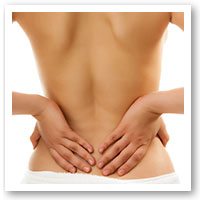
Acupuncture can be very effective in resolving low back pain. We are now seeing several research studies that confirm this, including some that show Acupuncture to be more effective than the conventional approach described above. Interestingly, studies tend to show that very light needling or needling that does not penetrate the skin (approaches often used in Japanese-style Acupuncture) can be as effective as deeper Chinese-style needling.
Our Acupuncturists are very experienced in treating low back pain and finds this is one of the conditions that responds best to Acupuncture.
What happens in a treatment?
The Acupuncturists approach to low back pain is to use the gentlest needling possible to reduce the pain and get you back to your normal life as quickly as possible. Often the needles are warmed with moxibustion (a warming herb) to really “unknot” the underlying muscle and ligaments. Most people find the treatments extremely relaxing – the feeling is a bit like having a good massage. The points chosen and method of Acupuncture depend on your constitution (the pattern you fall into based on your symptoms and on information gained from carefully palpating the body and on examination of your pulse and tongue). It’s important to work on the underlying cause of the problem as well as the symptoms.
So what works for one person with low back pain may be quite different from what works for another.
How long will it take to work?
Back pain that has recently come on responds more quickly than pain that has been present months or years. There is usually a response within 4-6 treatments, with further treatments consolidating this. Generally, the treatments would be weekly (or sometimes twice-weekly for severe, acute back strain) for the first few, and then we reduce the frequency as the condition improves. Health-fund rebates are available for Acupuncture treatments.
https://healthinthebay.com.au/wp-content/uploads/2013/09/acupuncture_low_back_pain.jpg200200Andrewhttps://healthinthebay.com.au/wp-content/uploads/2022/11/HITB-Horizontal-Header-Logo-Colour-02.pngAndrew2013-09-20 00:10:442016-06-28 09:29:43Acupuncture for Low Back Pain
Your body goes through many changes during pregnancy, and it is amazing at how well it adapts and accommodates for the increasing size of the baby, and then in preparation for the birthing process. Chiropractic can be helpful in several ways as your body goes through these changes.
As the baby grows your body is having to carry more weight which will put some strain on your body especially the lower back. With the increased size of the baby naturally your stomach enlarges which causes your centre of gravity to a more forward position. Then as the baby gets even larger it will often push on different structures of your body, this will commonly affect your ribs, particularly at the front, as they try to accommodate the baby. Then, close to the end of the pregnancy ligaments begin to loosen in preparation for the birth, and this can make the pelvis feel loose and unstable.
All these factors can and often do create some aches and pains, particularly if you have a history of back pain, but they are all things that can be gently treated with Chiropractic. Chiropractic helps by allowing the pelvis, back and ribs to remain mobile, which assists it in smoothly adapting through the process of those changes. as stable as possible. This helps to minimise any aches and pains that occur in this time, and keeps the muscles relaxed and loose. By keeping these joints moving well during pregnancy will make it easier for you to keep active and exercising which can help lead to having an easier labor.
Chiropractic can also help post pregnancy. After giving birth some women can feel very unstable in the pelvis, or they may have a separation and inflammation of the pubic bones. Then breastfeeding and even carrying a baby can often result in upper back and shoulder pain and stiffness. Chiropractic care is very effective in helping your body cope with these new postures and tasks, and generally getting your body back to its healthy and balanced state.
https://healthinthebay.com.au/wp-content/uploads/2013/07/Pregnancy-chiropractic.jpg200200Andrewhttps://healthinthebay.com.au/wp-content/uploads/2022/11/HITB-Horizontal-Header-Logo-Colour-02.pngAndrew2013-08-13 05:28:032016-06-28 09:31:48Chiropractic and Pregnancy
Many of us live with permanently stiff shoulders or a neck that seizes up from time to time. Our modern lifestyle is a major culprit, with computer work (especially on laptops) putting a lot of strain on the neck and shoulders. Out-of-control stress levels don’t help either. One of the worst environments for neck and shoulder pain is a high-pressure work environment with badly set-up computers and cold air flowing down on you from air conditioning. With this sort of combination of stress, poor ergonomics and the tendency to tense up the shoulder muscles in response to cold, it’s not surprising that so many people suffer from stiff neck and shoulders.
Other things that can trigger neck and shoulder pain are prolonged driving, freehand writing or drawing, occupations involving a lot of repetitive use of the arms (hairdressing comes to mind), and playing some musical instruments.
So what can be done? Obviously it’s important to address anything in your lifestyle that might be contributing, which could involve a rethink of your work or leisure patterns. I’ve included a list of other tips at the end.
But what if your shoulders and neck are still sore after doing everything you can to relax them? This is where acupuncture comes in.
Japanese acupuncture uses several needling techniques to melt tension in the neck and shoulders. Another technique that is great for neck and shoulder pain is moxibustion – the use of a warming herb on the tight, painful areas. Cupping is also very useful. But much of the treatment is done away from the local painful region– as it is just as important to treat the constitutional pattern that Oriental medicine sees as causing disruption to the flow of energy, as we see this as underlying the neck and shoulder pain. This ensures that treatments will have a lasting effect.
We usually see an improvement within 4-6 weekly treatments, and when this happens we scale back the frequency of sessions as your body “relearns” this state of reduced tension. Eventually most people will just need the occasional top-up session every few months or so during periods of particularly intense activity or stress.
Tips for relieving neck and shoulder stiffness:
Make sure your desk is properly set up. Many offices these days have ergonomic guidelines and it’s also possible to have an expert review your set-up.
Give your neck and shoulders a break by taking lots of breaks from computer work, or other intense activities like writing freehand, drawing, music practice or driving. Aim to have a break where you get up, walk around and stretch after every 20 min of typing etc.
If at all possible, avoid sitting in air-conditioning, or wear a scarf (or a top with a collar that covers your neck).
Warmth helps most people with this sort of pain, so try hot showers or heat packs.
Try to build some type of relaxation into your day, like meditation, yoga or Tai-Chi. Another really useful strategy is to focus on becoming aware of shoulder tension as it builds up and repeatedly and deliberately relax and drop your shoulders. Tricky to do at first, but it gets easier with time.
It is also often possible to strengthen other muscles in the upper body so that your traps don’t take all the strain. If you go to a gym, ask one of the trainers to show you how to strengthen these muscles.
https://healthinthebay.com.au/wp-content/uploads/2013/07/acup-shoulder-pain.jpg200200Andrewhttps://healthinthebay.com.au/wp-content/uploads/2022/11/HITB-Horizontal-Header-Logo-Colour-02.pngAndrew2013-07-18 23:49:562016-06-28 09:27:12Neck and shoulder pain.
If your back has ever seized up, you’ll know it’s one of the most disabling experiences there is. Or perhaps you suffer from a more low-grade, but still annoying and uncomfortable, form of low back pain. You’re far from alone, with somewhere between 70 and 85% of us having suffered an acute back strain at some point. The pain may be brought on by heavy lifting, sudden movements, or prolonged standing or driving, or it may appear “out of the blue”.
Western medicine does not have much to offer sufferers of low back pain, with usual advice being to gradually resume usual activities, while taking painkillers for the discomfort. In the longer term, strengthening exercises and losing excess weight can be useful. Surgery may be recommended for some specific problems affecting the lumbar spine (especially if the nerves that exit the spine are trapped), but tends to be a last resort and is not always successful.
Acupuncture for low back pain
Acupuncture can be very effective in resolving low back pain. We are now seeing several research studies that confirm this, including some that show acupuncture to be more effective than the conventional approach described above. Interestingly, studies tend to show that very light needling or needling that does not penetrate the skin (approaches often used in Japanese-style acupuncture) can be as effective as deeper Chinese-style needling.
What happens in a treatment?
My approach to low back pain is to use the gentlest needling possible to reduce the pain and get you back to your normal life as quickly as possible. I use mainly the Japanese style of acupuncture, which focuses on light needling (of carefully selected points) with deeper techniques when required. Often the needles are warmed with moxibustion (a warming herb) to really “unknot” the underlying muscle and ligaments. Most people find the treatments extremely relaxing – the feeling is a bit like having a good massage. The points chosen and method of acupuncture depend on your constitution (the pattern you fall into based on your symptoms and on information gained from carefully palpating the body, and on examination of your pulse and tongue). It’s important to work on the underlying cause of the problem as well as the symptoms.
So what works for one person with low back pain may be quite different from what works for another.
How long will it take to work?
Back pain that has recently come on responds more quickly than pain that has been present months or years. There is usually a response within 4-6 treatments, with further treatments consolidating this. Generally, the treatments would be weekly (or sometimes twice-weekly for severe, acute back strain) for the first few, and then we reduce the frequency as the condition improves.
https://healthinthebay.com.au/wp-content/uploads/2013/07/acup-lower-back-pain.jpg200200Andrewhttps://healthinthebay.com.au/wp-content/uploads/2022/11/HITB-Horizontal-Header-Logo-Colour-02.pngAndrew2013-07-18 23:46:352016-06-28 09:26:49Low back pain.
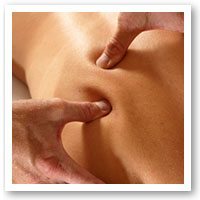
Trigger Point Therapy focuses on relieving referred pain or sensation (pain, tenderness, pins and needles, numbness and burning). A trigger point is a point of bound / taught fibres in a muscle, often referred to as muscle knots, a point of heightened tenderness or sensitivity, which prevents full usage of a particular muscle. Active trigger points have predictable referral patterns, some causing pain locally to the effected trigger point, others referring to other regions of the body. Due to this referral, a domino effect in terms of pain or injury can occur if trigger points are left untreated; this meaning an area previously unaffected by referred sensation may become affected.
From a patients perspective.
Trigger Point Therapy is a compression of the point of tenderness, which temporarily heightens the sensation already experienced due to additional pressure being applied to the area. The pressure must be held and maintained in order to obtain a release; in terms of sensation, it feels as though the practitioner holding the point is slowly releasing pressure, in actual fact the point is releasing / relaxing, which gives a sensation of relief as muscle function is improved and referred sensation is reduced.
Trigger Point Therapy with Massage.
Massaging an area with active trigger points can be painful; however, when massage and trigger point therapy is combined a practitioner can release muscles far more effectively. Remedial massage greatly increases blood flow to muscles, while trigger point therapy releases regions within muscles with restricted blood flow, thus providing nutrients to depleted muscle fibres in a more effective fashion. Active trigger points create a local twitch response (often confused with a muscle spasm); if a trigger point is left active after massage it won’t be long before it becomes tight and sore again due this twitch response, as the muscle is over engaging. Releasing trigger points allows for far greater fibre release with slow / stretching massage, which increases range of movement and encourages capillary growth, resulting in healthier muscle fibres.
In terms of performance: Clients who I have treated with trigger point therapy gain longer periods of relief and suffer less issues with their lymphatic system in terms of acid and other waste build up in their muscles; this meaning greater endurance and performance. If you enjoy sport and like massage, this is definitely something to consider within your fortnightly to monthly massage. Note: Trigger points take time to release, so treatment should be focused on a specific area of the body, not all over, to get the best results.
https://healthinthebay.com.au/wp-content/uploads/2013/07/trigger-point-therapy.jpg200200Andrewhttps://healthinthebay.com.au/wp-content/uploads/2022/11/HITB-Horizontal-Header-Logo-Colour-02.pngAndrew2013-07-16 00:18:262016-06-28 09:23:07Benefits of Trigger Point Therapy
Now, after reading Part 1 in last months newsletter, you may have a better understanding of how readily our body reacts and changes in response to stress. These changes will often occur without us having any awareness of them, but there are many other changes that occur that that we can feel. Many patients present to me with various aches and pains, that very often have an underlying cause of stress. When we are dealing with stress our body reacts in certain predictable ways. There are 3 muscles that will always tighten in response to stress. They are your diaphragm, your upper Trapezius and your Suboccipital muscles.
Your diaphragm is a sheet of muscle that sits like a dome and divides your internal body in half. It sits below your lungs and heart and above the rest of your organs, and is important in breathing as it moves down to help your lungs draw breath in and up to help push air out of your lungs. When it is tight it is not able to move down and this results in feeling short of breath. As it is attached to structures on the inside around the level of the lower ribs, any tightening of the diaphragm can pull on these structures and often create a twist in that area. This can result in pain in the back, along the spine, around the ribs, and sometimes even pain on breathing.
The upper Trapezius muscle sits across the top of your shoulders and up into the lower neck, as it tightens it will pull the shoulders up and pulls the neck down into the shoulders. This affects your posture and will create discomfort in your shoulders, between your shoulder blades and also your neck. It can also cause a pinching of the nerves in your neck resulting in numbness or a tingling or pins and needles sensation in your hands or fingers.
The Suboccipital muscles are short muscles that join the back of your skull to the upper neck. Any tightness in these muscles will cause your head to tilt back. They can give you pain in the upper neck and in the back of the skull. Tightness in these muscles together with the Trapezius muscles creates poor posture and stiffness running from the skull to your shoulder blades, resulting in neck and shoulder pain as well as headaches. Sustained tightness and resulting poor posture in this area can often result in achiness in your upper arm.
Another common reaction to stress is clenching or grinding your teeth. Apart from this being damaging to your teeth, it causes very tight jaw muscles. This in itself can give you pain around the jaw which can feel like a headache. These tight muscles will also affect the upper neck and temples due to where they attach, and cause neck pain and stiffness and headaches.
Stress is a part of every persons life, and it can be positive, such as it being a motivator, but it can also cause problems. Just like everything in life there needs to be balance for there to be health and wellness. Stress can be balanced by exercise and relaxation, so it is important to find forms of exercise and relaxation that work for you, and incorporate that into your daily life.
https://healthinthebay.com.au/wp-content/uploads/2012/10/stress_ball.jpg200200Andrewhttps://healthinthebay.com.au/wp-content/uploads/2022/11/HITB-Horizontal-Header-Logo-Colour-02.pngAndrew2012-12-05 06:44:132016-06-28 09:07:27Stress and your body, part 2.
Like all modern healthcare, Chiropractic techniques are constantly changing with the times. Just as your GP no longer applies leeches to you, Chiropractors have updates their techniques for improved results and experiences. Here are some common myths debunked…
Once I see a Chiropractor I will have to keep going back.
Our aim is to help you get rid of your symptoms and also keep them away. We give recommendations as to what would be the best course of treatments to achieve both goals.
It may occur that after a few visits you feel improved but are asked to come back for a follow up treatment, this is because the pain or discomfort is one of the last signs or symptoms to come on and the first to disappear. These signs may have disappeared but the imbalance that caused the problem and hence the pain, may still be there to some degree. If this imbalance that is left over is not corrected it can progress again, and the symptoms will return. At Health In The Bay we incorporate different techniques that have been found to be effective in changing your body out of old patterns, which allows the body to become stable and hence need less treatments overall.
We may also recommend that you return for maintenance. It is a good idea to have occasional maintenance treatments as this helps correct any problems before they become symptomatic, and the earlier they are addressed they quicker they resolve.
Adjustments hurt.
Chiropractic adjustments generally don’t hurt. When having a manual adjustment you may hear a crack, which may be surprising if you haven’t experienced it before. This is not bone rubbing against bone or anything similar, it is just the fluid that naturally sits inside the joint, releasing a gas due to the change in pressure. Using the tool called an Activator is even more gentle. It is a tool that gives a small push to the joint in a specific direction, but no crack is heard. The adjustments themselves don’t hurt, but often you have come to see the chiropractor because of some pain you are experiencing, and as chiropractic is a hands on technique, the chiropractor will be working at the area of pain and hence it may be tender.
Chiropractic adjustments are dangerous.
Chiropractors study at University a minimum of 5 years which includes in-depth study of the anatomy and neurology of the whole body as well as adjusting techniques. With this knowledge any risk is minimised. There is a very small risk with manual neck adjustments, but this is only in those already predisposed to circulation problems. By taking a thorough history we can ascertain if there is some risk, and adapt the treatment accordingly. We also conduct screen tests prior to adjusting, if this indicates a potential risk we will not perform the adjustment. If we are happy there is no risk, but you are still not comfortable with the idea of being adjusted manually we can use a different method that does not involve cracking.
There is also a risk of mild soreness after a treatment, which is due to the body changing and adjusting. This is usually only with the first treatment as the body is getting used to these changes, and would only last one to two days.
Chiropractors only treat the spine.
Chiropractors study the anatomy and adjustment techniques of the whole body. It is true that the majority of what we treat is the spine, but that is not all we treat. We commonly treat other non-spinal joints, which can be symptomatic due to their relationship with the spine, or due to injuries. Common problems treated include RSI of the wrist, shoulder pain or stiffness, sprained ankles, or wrists, shin splints, generalised knee pain (often noticed when walking up and down stairs) unexplained knee swelling, dropped arches of the feet, plantar fasciitis, and more.
https://healthinthebay.com.au/wp-content/uploads/2009/11/Chiro-Myths-Reality.jpg200200Andrewhttps://healthinthebay.com.au/wp-content/uploads/2022/11/HITB-Horizontal-Header-Logo-Colour-02.pngAndrew2012-09-27 04:42:052016-06-28 09:05:12Chiropractic: Myths and misconceptions.
Neck and shoulder pain is a very common ailment in today’s times, and it is almost always due to our posture, especially when our days are spent at a desk usually in front of a computer. Firstly the position we are in is not always the most ergonomic. We are all different heights and sizes and desks and chairs don’t always accommodate for these differences. We may be using 2 monitors and moving left to right to work on both, or twisting to get folders from shelves that are next to us or behind us.
Secondly we may be sitting at your computer for hours at a time without getting up and having a break, and then to compound that we can be so focused on what we are doing we often forget to sit up correctly and often end up with a rounded lower back, a forward head position and rounded shoulders. This will almost always lead to tight muscles and pain in the shoulders, between the shoulder blades, and up into the neck. It can often contribute to headaches also. Then as a consequence of these tight muscles it becomes more difficult to maintain a good posture, so it then becomes a cycle of poor posture leading to muscle spasm, causing poor posture.
Some simple things you can do to stop this cycle from occurring!
Firstly be mindful of your office/desk setup. Have your computer square in front of you with the monitor at a height so that the centre of the screen is at a 15degree down angle from your eyes. Have the monitor as far away from you as possible while still comfortable for you to read. It should be a minimum of 50cm. Also have your computer at right angles to a lit or window to minimize any glare on the screen. The keyboard should be situated such that your elbow is at 90 degrees, or even slightly lower. This helps your wrist to be straight and reduces the potential for a repetitive strain injury. Have your chair at a height so that your feet are flat on the ground and thighs are perpendicular to the floor.
Secondly, be conscious of your body. No matter how ergonomic your desk setup is, it wont help if you dont think abouthow you’re sitting. Most importantly, don’t slouch. try and sit with your back straight and your shoulders back and down. Have your head up and try to elongate your neck. Get up every 20min to have a walk around, and a stretch.
Thirdly, stretch…
At work
Neck – by bending it gently to the left hold it for 10 sec, bring your head back to neutral, then repeat 4 more times. Do the same with the neck bent to the right. Then also forward by tucking your chin in and bending it towards your chest. Then bend your neck backwards by looking up to the ceiling. While doing these stretches keep your shoulders down.
Shoulders – loosen up your shoulders by firstly shrugging the shoulders, hold them up for 5 sec then let them drop. Repeat this 4 times.
Roll your shoulders slowly backwards bringing them as far up, back, down and forward as possible. Do this 5 times. Then roll them slowly forwards 5 times, again bringing them as far up, forward, down and backwards as possible.
At home
At the end of the day when you get home get a small rolled towel, about 10-15cm in diameter. While lying on your back place the rolled towel across the back of your neck. Push your head back towards the ground and hold it for 5 sec, then relax for 5 sec. Then repeat 4 more times.
Next have a rolled up towel that is about 25-30 cm long and about 8 cm in diameter. Lying on your back and place the towel along the length of your spine between your shoulder blades. You can also place a low pillow under your head to make sure your neck is comfortable. Lying on the towel in this way allows your shoulders to relax back, and they also relax down. It allows your shoulder muscles and those between your shoulder lades to relax and release. This exercise helps release tight muscles but it also helps improve your posture, that why it’s good to get in the habit of doing this exercise even if you’re not feeling sore or tight.
https://healthinthebay.com.au/wp-content/uploads/2012/08/computer-neck-pain.jpg200200Andrewhttps://healthinthebay.com.au/wp-content/uploads/2022/11/HITB-Horizontal-Header-Logo-Colour-02.pngAndrew2012-08-28 06:00:042016-06-25 14:05:24Neck and shoulder pain exercises.