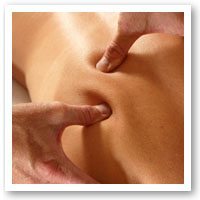
Neck and shoulder tension is one of the banes of modern life – when severe, the pain often extends down the arms and also can lead to headaches and jaw stiffness. It can really limit your life. But you don’t have to be stuck with it!
Acupuncture is great for melting those knots. Within 4-6 treatments we usually see substantial relief, with the hard areas becoming much looser. The time taken for this to happen depends on how long the tension has been there for, and how severe it is.
The treatments are very gentle – Acupuncture use extremely fine needles that you barely notice, plus moxibustion, a form of herbal heat treatment. The combination works really well in relaxing muscles, especially in the shoulders and neck
During a treatment, our Acupunctuirists uses a combination of Acupuncture points specifically targeted at any imbalance underlying the muscle stiffness, as well as local points to bring fast relief. We also look at lifestyle measures to help prevent the problem recurring.
Tara is a Registered Acupuncturist with many years’ experience in treating neck and shoulder issues. Health-fund rebates are available for Acupuncture treatments.
https://healthinthebay.com.au/wp-content/uploads/2013/09/acupuncture_neck_shoulder.jpg200200Andrewhttps://healthinthebay.com.au/wp-content/uploads/2022/11/HITB-Horizontal-Header-Logo-Colour-02.pngAndrew2013-09-20 00:14:572016-06-28 09:40:48Acupuncture for Neck and Shoulder pain
Acupuncture can be very effective in resolving low back pain. We are now seeing several research studies that confirm this, including some that show Acupuncture to be more effective than the conventional approach described above. Interestingly, studies tend to show that very light needling or needling that does not penetrate the skin (approaches often used in Japanese-style Acupuncture) can be as effective as deeper Chinese-style needling.
Our Acupuncturists are very experienced in treating low back pain and finds this is one of the conditions that responds best to Acupuncture.
What happens in a treatment?
The Acupuncturists approach to low back pain is to use the gentlest needling possible to reduce the pain and get you back to your normal life as quickly as possible. Often the needles are warmed with moxibustion (a warming herb) to really “unknot” the underlying muscle and ligaments. Most people find the treatments extremely relaxing – the feeling is a bit like having a good massage. The points chosen and method of Acupuncture depend on your constitution (the pattern you fall into based on your symptoms and on information gained from carefully palpating the body and on examination of your pulse and tongue). It’s important to work on the underlying cause of the problem as well as the symptoms.
So what works for one person with low back pain may be quite different from what works for another.
How long will it take to work?
Back pain that has recently come on responds more quickly than pain that has been present months or years. There is usually a response within 4-6 treatments, with further treatments consolidating this. Generally, the treatments would be weekly (or sometimes twice-weekly for severe, acute back strain) for the first few, and then we reduce the frequency as the condition improves. Health-fund rebates are available for Acupuncture treatments.
https://healthinthebay.com.au/wp-content/uploads/2013/09/acupuncture_low_back_pain.jpg200200Andrewhttps://healthinthebay.com.au/wp-content/uploads/2022/11/HITB-Horizontal-Header-Logo-Colour-02.pngAndrew2013-09-20 00:10:442016-06-28 09:29:43Acupuncture for Low Back Pain
Sports injuries (and other injuries like over-use injuries, repetitive strain injury and tendinitis) are really annoying because they stop you doing the sport or leisure activity you love, or they might interfere with work or study.
Common sports and over-use injuries include:
Tennis elbow (often caused by something other than tennis!)
Golfer’s elbow (often caused by something other than golf!)
Knee ligament injuries
Iliotibial tract (band) syndrome (runner’s knee)
Shin splints
Ankle sprains
Achilles tendonitis, calf strain
Hamstring strain, groin strain
Frozen shoulder (often not related to sports or over-use, but it can respond very well to acupuncture), rotator cuff tear
Whether you have occasional niggles or acute, severe pain, you probably want to get to the bottom of what’s happening and find a long-lasting solution. This is where acupuncture comes in. Most of the injuries above respond well to Acupuncture. For recent injuries, we usually see a response in around 4 treatments, but longstanding injuries can take longer.
Treatments involve needles placed at specific acupuncture points in the region of the injury, as well as ones inserted at points further along the acupuncture meridian (one of a network of lines that circulate the energy or “Qi”). Other points are also used to promote healing. For these types of injury, moxibustion (a form of herbal heat treatment) is also very useful. Massage is also used when indicated.
Our Acupuncturists are a registered Acupuncturist with experience in treating a wide variety of sports injuries, including in elite athletes. Health-fund rebates are available for Acupuncture treatments.
https://healthinthebay.com.au/wp-content/uploads/2013/09/acupuncture_sports_injuries.jpg200200Andrewhttps://healthinthebay.com.au/wp-content/uploads/2022/11/HITB-Horizontal-Header-Logo-Colour-02.pngAndrew2013-09-20 00:06:122016-06-28 09:31:47Acupuncture for Sports and Other Injuries
Congratulations, you’re pregnant! While you might be thrilled to bits, you might not yet be experiencing that “glow” everyone talks about. In fact you might be feeling distinctly unglowing! Some women breeze through this stage of pregnancy but many find their energy is at rock bottom and they experience anything from “morning sickness” to all-day queasiness to outright nausea and vomiting. You may also feel anxious about the weeks and months to come, especially if you’ve previously had fertility struggles or a miscarriage.
The good news is that acupuncture and Chinese herbal medicine can help with many of these conditions.
You might be wondering if acupuncture and Chinese Herbal Medicine are safe in pregnancy. The answer is a resounding “Yes”, as long as given by a qualified practitioner who has been trained in the points and herbs to use during pregnancy and those to avoid.
Quell nausea naturally
Some researchers think that the heightened sense of smell and aversion to anything but the blandest of food could be part of an evolutionary mechanism to protect the embryo from food poisoning. Perhaps pregnancy hormones boost our sense of smell to protect us from consuming food that has gone off or would be harmful in another way. This certainly seems to make sense given that we did not have fridges for most of our evolutionary history!
Some women experience disabling nausea to the point where they can barely get out of bed and their diet becomes very restricted. If you are finding it hard to cope with morning sickness, acupuncture can be very useful. Unfortunately this has not yet been well proven by medical research. However, one study looked at 88 women with morning sickness who received either acupuncture plus acupressure or medication plus vitamin B12. The women who had acupuncture/acupressure had similar relief to those who took medication. Although it took longer to gain this improvement, the acupuncture group were actually better able to function in everyday life than those who took the drugs.
Boost your energy levels
Feeling extremely tired in early pregnancy may be another evolutionary adaptation, as it encourages us to rest during this time. That being said, if you are completely wiped out and unable to get out of bed, then treatment is a good idea.
I find acupuncture very helpful in gently boosting energy levels in early pregnancy. Treatments concentrate on boosting energy production by working on specific meridians (energy pathways) and organs, depending on your symptoms, pulse and tongue pattern. In this way, treatments are tailored to suit your individual circumstances. As well as very gentle needling, we warm key points on the body by applying a herb (moxibustion).
Calm your mind
Acupuncture is fantastic for calming the mind and harmonizing the emotions. Many women find themselves feeling anxious at the change in their circumstances and wondering how they will cope with pregnancy, birth or being a mum. Acupuncture treatments, as well as talking it over with a trusted friend, or if necessary, a counsellor, can really help. It can also help you sleep better at a time when hormonal changes may be interfering with your night’s rest.
Protecting the pregnancy
One of the things you may be concerned about is miscarriage, which is something no-one wants to experience. Most miscarriages are caused by chromosomal abnormalities in the embryo, and cannot be avoided. However, other causes do occur, where something seems to go wrong in the implantation process. So, particularly if you have had more than one miscarriage, acupuncture and Chinese herbal medicine may be of benefit. We theorize that these therapies counteract an over-active immune system or aid implantation in another way. This is certainly borne out by studies on animals. There has not been much research done on this in humans, but one study of 250 women who had become pregnant after IVF showed that those who took a Chinese herbal formula as well as a standard medication (progesterone) to support the pregnancy had a significantly lower miscarriage rate (13% miscarried) than those who just took the progesterone (23% miscarried).
Several acupuncture points are also used to reduce the chance of miscarriage. I recommend that women who’ve had previous miscarriages, especially if a chromosomal cause has been ruled out, have acupuncture weekly from conception (preferably before, as part of a pre-conception program) until about 12 weeks. Herbs would also be useful in this situation.
If you do experience bleeding in pregnancy, as alarming as it seems, remember that reasons other than miscarriage are often found, such as bleeding from the implantation site and hormonal changes affecting the cervix. Get checked out medically (see your obstetrician or ask your GP for a referral to your hospital’s Early Pregnancy Unit) and also see your acupuncturist as soon as you can, and hopefully your mind can be put at rest.
Moving past the first trimester
Once they get past the first 13 weeks, many women find they start to feel much better, with energy levels picking up and nausea subsiding. This is when the glow starts! See next month’s newsletter for more about how acupuncture can help later in pregnancy.
More information?
For more information or to make an appointment to see Toby or Louise, our Acupuncturists, call 9904-1333 or contact us here: Contact.
https://healthinthebay.com.au/wp-content/uploads/2013/07/acupuncture_fertility.jpg200200Andrewhttps://healthinthebay.com.au/wp-content/uploads/2022/11/HITB-Horizontal-Header-Logo-Colour-02.pngAndrew2013-08-07 03:23:552016-06-28 09:27:57Acupuncture and Chinese Herbal Medicine in Pregnancy
If your back has ever seized up, you’ll know it’s one of the most disabling experiences there is. Or perhaps you suffer from a more low-grade, but still annoying and uncomfortable, form of low back pain. You’re far from alone, with somewhere between 70 and 85% of us having suffered an acute back strain at some point. The pain may be brought on by heavy lifting, sudden movements, or prolonged standing or driving, or it may appear “out of the blue”.
Western medicine does not have much to offer sufferers of low back pain, with usual advice being to gradually resume usual activities, while taking painkillers for the discomfort. In the longer term, strengthening exercises and losing excess weight can be useful. Surgery may be recommended for some specific problems affecting the lumbar spine (especially if the nerves that exit the spine are trapped), but tends to be a last resort and is not always successful.
Acupuncture for low back pain
Acupuncture can be very effective in resolving low back pain. We are now seeing several research studies that confirm this, including some that show acupuncture to be more effective than the conventional approach described above. Interestingly, studies tend to show that very light needling or needling that does not penetrate the skin (approaches often used in Japanese-style acupuncture) can be as effective as deeper Chinese-style needling.
What happens in a treatment?
My approach to low back pain is to use the gentlest needling possible to reduce the pain and get you back to your normal life as quickly as possible. I use mainly the Japanese style of acupuncture, which focuses on light needling (of carefully selected points) with deeper techniques when required. Often the needles are warmed with moxibustion (a warming herb) to really “unknot” the underlying muscle and ligaments. Most people find the treatments extremely relaxing – the feeling is a bit like having a good massage. The points chosen and method of acupuncture depend on your constitution (the pattern you fall into based on your symptoms and on information gained from carefully palpating the body, and on examination of your pulse and tongue). It’s important to work on the underlying cause of the problem as well as the symptoms.
So what works for one person with low back pain may be quite different from what works for another.
How long will it take to work?
Back pain that has recently come on responds more quickly than pain that has been present months or years. There is usually a response within 4-6 treatments, with further treatments consolidating this. Generally, the treatments would be weekly (or sometimes twice-weekly for severe, acute back strain) for the first few, and then we reduce the frequency as the condition improves.
https://healthinthebay.com.au/wp-content/uploads/2013/07/acup-lower-back-pain.jpg200200Andrewhttps://healthinthebay.com.au/wp-content/uploads/2022/11/HITB-Horizontal-Header-Logo-Colour-02.pngAndrew2013-07-18 23:46:352016-06-28 09:26:49Low back pain.
Trigger Point Therapy focuses on relieving referred pain or sensation (pain, tenderness, pins and needles, numbness and burning). A trigger point is a point of bound / taught fibres in a muscle, often referred to as muscle knots, a point of heightened tenderness or sensitivity, which prevents full usage of a particular muscle. Active trigger points have predictable referral patterns, some causing pain locally to the effected trigger point, others referring to other regions of the body. Due to this referral, a domino effect in terms of pain or injury can occur if trigger points are left untreated; this meaning an area previously unaffected by referred sensation may become affected.
From a patients perspective.
Trigger Point Therapy is a compression of the point of tenderness, which temporarily heightens the sensation already experienced due to additional pressure being applied to the area. The pressure must be held and maintained in order to obtain a release; in terms of sensation, it feels as though the practitioner holding the point is slowly releasing pressure, in actual fact the point is releasing / relaxing, which gives a sensation of relief as muscle function is improved and referred sensation is reduced.
Trigger Point Therapy with Massage.
Massaging an area with active trigger points can be painful; however, when massage and trigger point therapy is combined a practitioner can release muscles far more effectively. Remedial massage greatly increases blood flow to muscles, while trigger point therapy releases regions within muscles with restricted blood flow, thus providing nutrients to depleted muscle fibres in a more effective fashion. Active trigger points create a local twitch response (often confused with a muscle spasm); if a trigger point is left active after massage it won’t be long before it becomes tight and sore again due this twitch response, as the muscle is over engaging. Releasing trigger points allows for far greater fibre release with slow / stretching massage, which increases range of movement and encourages capillary growth, resulting in healthier muscle fibres.
In terms of performance: Clients who I have treated with trigger point therapy gain longer periods of relief and suffer less issues with their lymphatic system in terms of acid and other waste build up in their muscles; this meaning greater endurance and performance. If you enjoy sport and like massage, this is definitely something to consider within your fortnightly to monthly massage. Note: Trigger points take time to release, so treatment should be focused on a specific area of the body, not all over, to get the best results.
https://healthinthebay.com.au/wp-content/uploads/2013/07/trigger-point-therapy.jpg200200Andrewhttps://healthinthebay.com.au/wp-content/uploads/2022/11/HITB-Horizontal-Header-Logo-Colour-02.pngAndrew2013-07-16 00:18:262016-06-28 09:23:07Benefits of Trigger Point Therapy
Myofascial Trigger Point Therapy is a technique used by Massage Therapists which was developed over 50 years ago. Direct pressure is applied to a specific muscle that has become contracted or over-lengthened for extended periods of time preventing it from returning to its rest position.
Trigger Points, also commonly referred to as “knots”, are felt as painful areas in the muscles that cause pain to refer into other parts of the body. The individual may also experience symptoms such as tingling, numbness, burning, as well as weakness and restricted range of motion in the affected muscle. These points can occur in any part of the body, but are often most likely to be found in the upper back or neck. Trigger points will usually occur on both sides of the body, with one side being more symptomatic than the other.
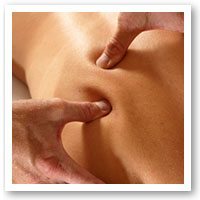
Upon compression by the therapist, the trigger point will often reproduce the individual’s pain pattern. As the muscle relaxes, the pain and discomfort should then diminish. Massage therapists will apply pressure to trigger points using their thumbs, knuckles and elbows, as well as with specialised treatment tools. T-bars made of wood, plastic or metal, often rubber capped, may be used.
The most common causes of trigger points are poor posture, structural imbalances, repetitive activity and overuse, emotional factors, and direct trauma or injury.
https://healthinthebay.com.au/wp-content/uploads/2011/03/massage_trigger_point.jpg200200Andrewhttps://healthinthebay.com.au/wp-content/uploads/2022/11/HITB-Horizontal-Header-Logo-Colour-02.pngAndrew2011-03-22 23:59:162016-06-25 12:48:17Myofascial Trigger Point Therapy
It is likely that most individuals have at some point in time experienced sensations of pain and discomfort caused by “knots”, also known as Trigger Points. These are painful areas in the muscles that cause pain to refer into other parts of the body, as well as create symptoms of weakness and fatigue.
A Trigger Point is the body’s response to a physical, emotional or chemical disturbance where the muscle becomes contracted or over-lengthened for extended periods of time preventing it from returning to its rest position. This then restricts the movement of the muscle and decreases circulation. The muscle then becomes deprived of nutrients and oxygen, which results in a collection of metabolic waste.
The most common causes of Trigger Points are poor posture, structural imbalances, repetitive activity and overuse, emotional factors, and direct trauma or injury. These points can occur in any muscles of the body, but are most commonly found in the neck and upper back. Trigger points can themselves bring about a variety of issues, such as tension headaches, tinnitus (ringing in the ears), jaw pain, lower back pain and carpal tunnel syndrome.
Trigger Points can be effectively treated with massage therapy where direct pressure is applied to the area in question. Upon compression, the Trigger Point will often reproduce the individual’s pain pattern. As the muscle relaxes, the pain and discomfort should then diminish.
Self care is also important to help prevent the re-occurrence of Trigger Points. This can include using a heat pack when muscles are tense or painful, having hot baths after treatment, keeping well hydrated, and carrying out simple stretch and range of motion exercises. Your massage therapist will be able to assist you with such exercises, and is also there to answer any questions or concerns that you may have.
https://healthinthebay.com.au/wp-content/uploads/2011/03/massage_knot.jpg200200Andrewhttps://healthinthebay.com.au/wp-content/uploads/2022/11/HITB-Horizontal-Header-Logo-Colour-02.pngAndrew2011-03-15 23:13:122016-06-25 12:49:39A Knotty Problem